Running Google Ads in New York City is different from running ads almost anywhere else in the country.
The competition is sharper.
The clicks are more expensive.
And if your campaign structure is weak, Google can drain your budget before launch.
A lot of NYC businesses make the same mistake in the beginning. They launch broad campaigns targeting all of New York, turn on automated bidding, and assume leads will eventually come in.
Sometimes they do.
But most of the time, the business ends up paying for irrelevant clicks from people who were never serious buyers to begin with.
That’s usually where frustration starts.
The business owner thinks Google Ads “doesn’t work,” when the real problem is that the campaign was too broad from day one.
In a market like NYC, precision matters more than reach.
Contents
- Why Broad Targeting Usually Fails in NYC
- Long-Tail Keywords Usually Bring Better Customers
- Exact Match Keywords Give Better Control
- Local Google Ads Assets Matter More Than People Think
- Budget Control Is More Important Than Budget Size
- Conversion Tracking Changes Everything
- Landing Pages Can Make or Break Campaign Performance
- The Best Google Ads Strategy for NYC Businesses Is Precision
- FAQs
Why Broad Targeting Usually Fails in NYC
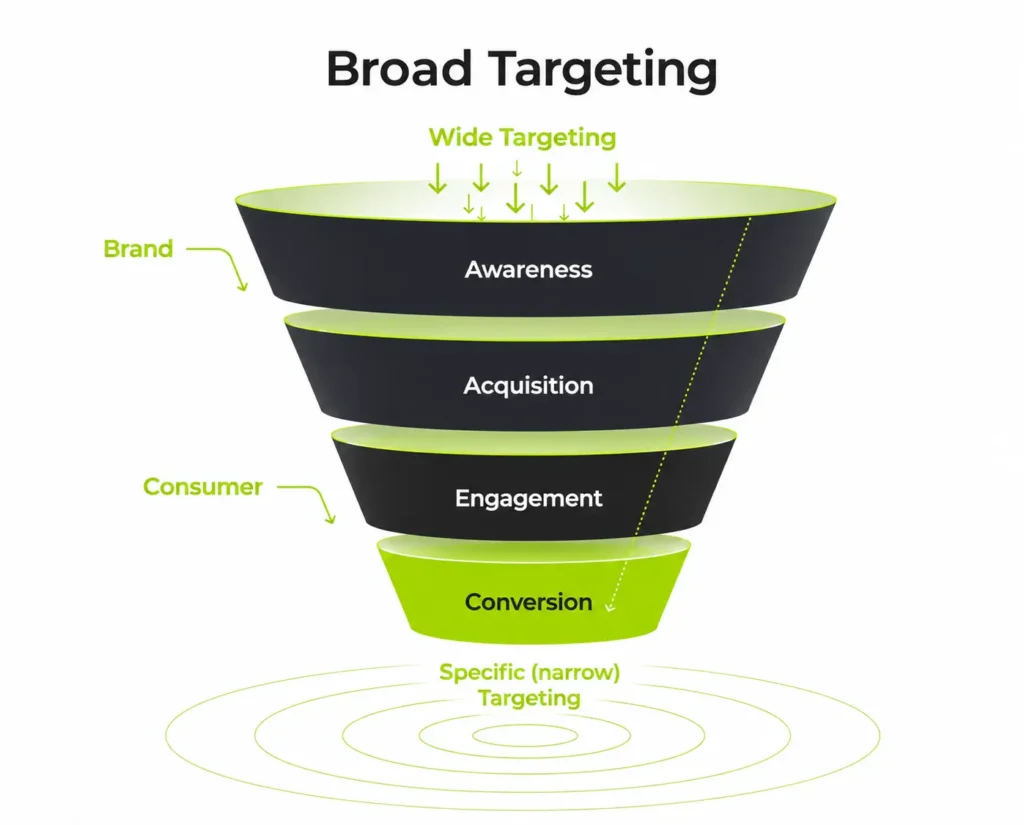
Many businesses assume targeting all of New York City will bring more leads.
Technically, it can bring more traffic.
But traffic and qualified leads are not the same thing.
New York is not one simple market. Search behavior changes from borough to borough and sometimes even block to block. Someone searching in Manhattan may behave completely differently from someone searching in Queens or Brooklyn.
That’s why hyper-local targeting tends to perform better.
Instead of trying to reach the entire city, smarter campaigns focus on specific neighborhoods, zip codes, or tight service areas.
A local dentist in Brooklyn Heights does not need clicks from users sitting an hour away in the Bronx.
And an HVAC company servicing Upper East Side apartments should not waste budget on searches outside its actual service radius.
Smaller targeting usually creates cleaner data, stronger lead quality, and better budget control.
Especially in NYC.
Long-Tail Keywords Usually Bring Better Customers
One of the biggest mistakes advertisers make is chasing broad keywords because the search volume looks attractive.
Keywords like:
- lawyer NYC
- plumber New York
- dentist Manhattan
…may generate traffic, but they are also some of the most competitive and expensive searches in Google Ads.
And honestly, many of those users are still researching.
Long-tail keywords tend to work better because they reveal stronger intent.
Someone searching for “emergency dentist brooklyn heights” already knows what they need. They are not casually browsing.
They are looking for Solution now.
That difference matters because NYC clicks are expensive. Even a small amount of irrelevant traffic can quietly destroy profitability over time.
The businesses that usually perform well focus less on traffic volume and more on buying intent.
Exact Match Keywords Give Better Control
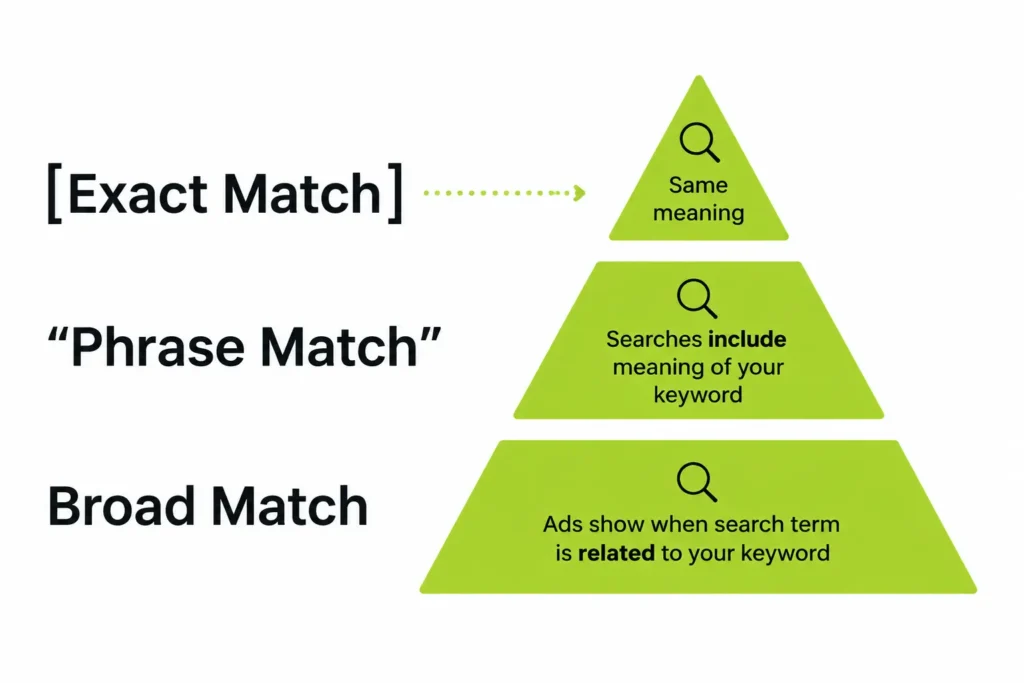
A lot of campaigns fail because Google’s automation is trusted too early.
Broad match targeting sounds appealing because it promises reach and discovery. But for smaller businesses with limited budgets, it can also open the door to a huge amount of wasted spend.
That’s why exact match campaigns are often safer in the beginning.
They keep the campaign focused on highly relevant searches instead of loosely related variations.
And in NYC, relevance matters.
A tighter keyword structure usually improves:
- lead quality
- conversion rates
- budget efficiency
- search intent accuracy
Once campaigns start generating reliable conversion data, broader targeting can sometimes be tested carefully.
But most successful local campaigns begin with control first.
Not scale first.
Local Google Ads Assets Matter More Than People Think
New Yorkers search differently from users in smaller cities.
A lot of searches happen while commuting, walking, or comparing nearby businesses on mobile devices.
That’s why local Google Ads Assets are important.
Location Assets help users quickly identify where your business is located. Call Assets make it easier for mobile users to contact you immediately without extra steps.
And Sitelink Assets allow users to jump directly into service pages, booking pages, or pricing information.
Individually, these things may seem small.
Together, they improve visibility and make the ad feel more complete and trustworthy.
And trust matters when users are comparing multiple businesses within seconds.
Budget Control Is More Important Than Budget Size
A common mistake businesses make is increasing ad spend before the campaign is properly optimized.
More money does not fix weak targeting.
It usually just increases waste faster.
The smarter approach is starting small, testing carefully, and scaling only after identifying what actually converts.
That means understanding:
- which keywords produce leads
- which neighborhoods convert best
- which landing pages work
- which devices perform strongest
A smaller campaign with strong intent will often outperform a large campaign built on weak traffic.
Especially in New York City.
Conversion Tracking Changes Everything
Some businesses still run Google Ads without proper conversion tracking.
Which means they are basically guessing.
Clicks alone do not tell you if the campaign is profitable.
You need to know:
- which keyword generated the lead
- which ad drove the phone call
- which landing page converted
- which searches wasted money
Without that information, optimization becomes extremely difficult.
Strong conversion tracking helps businesses make decisions based on real performance instead of assumptions.
And in a high-cost market like NYC, that difference becomes very important very quickly.
Landing Pages Can Make or Break Campaign Performance
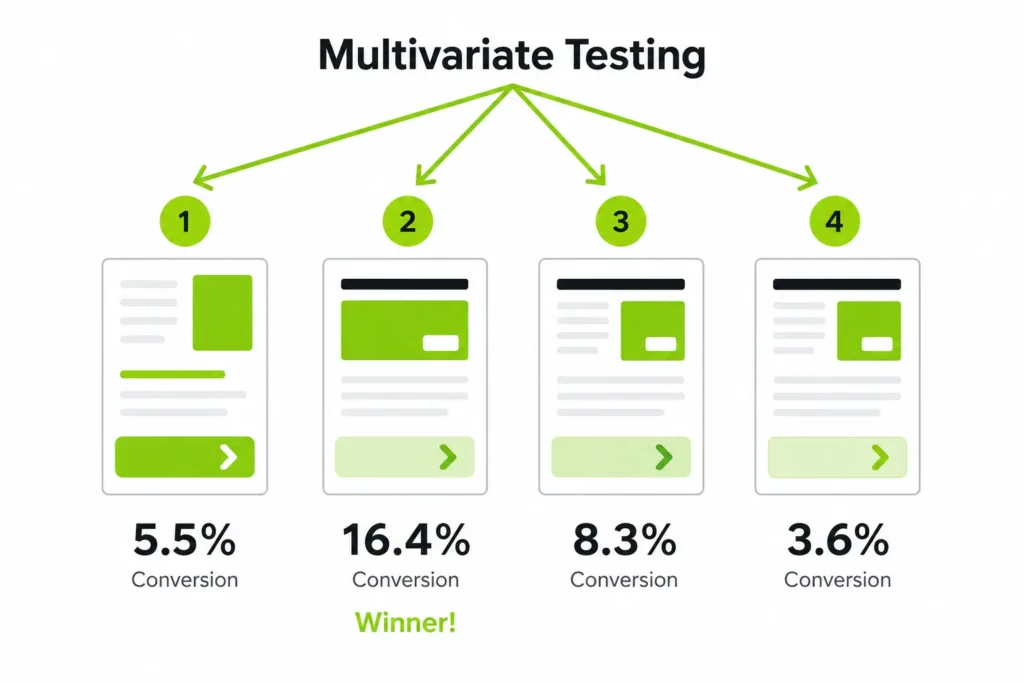
Even a strong Google Ads campaign can fail if the landing page experience feels weak.
This happens more often than people realize.
A user clicks an ad expecting a specific service, then lands on a generic homepage with too many distractions and no clear direction.
Most users leave immediately.
Good landing pages feel focused.
They load quickly.
They work well on mobile.
And they match the exact intent behind the search.
If someone searches for emergency HVAC repair in Manhattan, the page should instantly reflect that service and location.
Not force the user to hunt for information.
Small friction points quietly kill conversions.
The Best Google Ads Strategy for NYC Businesses Is Precision
The businesses that usually win with Google Ads in NYC are not always the ones spending the most money.
They are usually the ones with the cleanest structure.
They target smaller areas.
They focus on high-intent searches.
They track conversions carefully.
And they scale slowly based on real data.
That approach may look less exciting in the beginning.
But it usually creates stronger profitability over time.
And honestly, that’s what matters.
If your campaigns are generating clicks but not meaningful leads, the issue is often not Google Ads itself. It’s usually the structure behind the campaign.
That’s why many businesses eventually choose to work with a professional google ads agency in nyc that understands how local search behavior actually works inside a competitive market like New York City.
FAQs
What is the best Google Ads strategy for NYC businesses?
The best strategy usually focuses on hyper-local targeting, exact match keywords, strong conversion tracking, and controlled budget scaling instead of broad citywide campaigns.
Why are Google Ads more expensive in NYC?
Competition is significantly higher in NYC across industries like legal services, healthcare, home improvement, and real estate. Higher advertiser competition increases Cost-Per-Click rates.
Should small businesses use broad match keywords?
In most cases, small businesses benefit more from exact match or tightly controlled keyword targeting in the beginning because it reduces wasted spend.
How much should a NYC business spend on Google Ads?
It depends on the industry and competition level. Some businesses can begin with smaller testing budgets, while highly competitive industries may require larger investments.
Do landing pages affect Google Ads performance?
Yes. Even highly targeted campaigns can struggle if the landing page is slow, generic, or disconnected from the search intent behind the ad.