Running successful Google Ads campaigns is difficult now. Between rising CPC, changing audience behavior, Smart Bidding updates, and constant competition, advertisers now need more than manual work to stay profitable.
That is why more marketers are turning to AI tools for Google Ads.
The right one can help automate repetitive tasks, improve optimization, reduce wasted spend, and uncover insights that hidden inside large amounts of Google Ads data. Instead of spending hours adjusting bids or reviewing reports manually, businesses are now using AI-powered systems to improve campaign performance.
But not every AI tool delivers real value.
Some focus only on reporting. Others specialize in ad testing, keyword management, or bid optimization. A few are built for complete automation across Google Ads campaigns.
In this guide, we will break down the best AI tools for Google Ads in 2026, what each tool does best, and which type of advertiser should use them.
Whether you manage one Google Ads account or multiple PPC campaigns across clients, this list will help you choose the right tool for your workflow.
Contents
- Here is Quick Comparison
- Why AI Tools for Google Ads Matter in 2026
- What Makes the Best AI Tools for Google Ads?
- 1. Ryze AI – Best AI for Full Campaign Automation
- 2. Optmyzr – Best for Advanced PPC Automation
- 3. Adalysis – Best for Ad Testing and Ad Copy Optimization
- 4. Opteo – Best for Simple Google Ads Optimization
- 5. WordStream – Best for Beginners and Small Businesses
- 6. Adzooma – Best Free AI Tool for Google Ads
- 7. PPC Signal – Best for Data-Driven Advertisers
- 8. Claude + Google Ads API – Best for Technical Teams
- 9. Madgicx – Best for Creative Optimization
- 10. Google Ads Scripts – Best Free Automation Option
- How to Choose the Right AI Tool for Google Ads
- Final Thoughts on the Best AI Tools for Google Ads
- Need Expert Help Managing Your Google Ads?
- Frequently Asked Questions
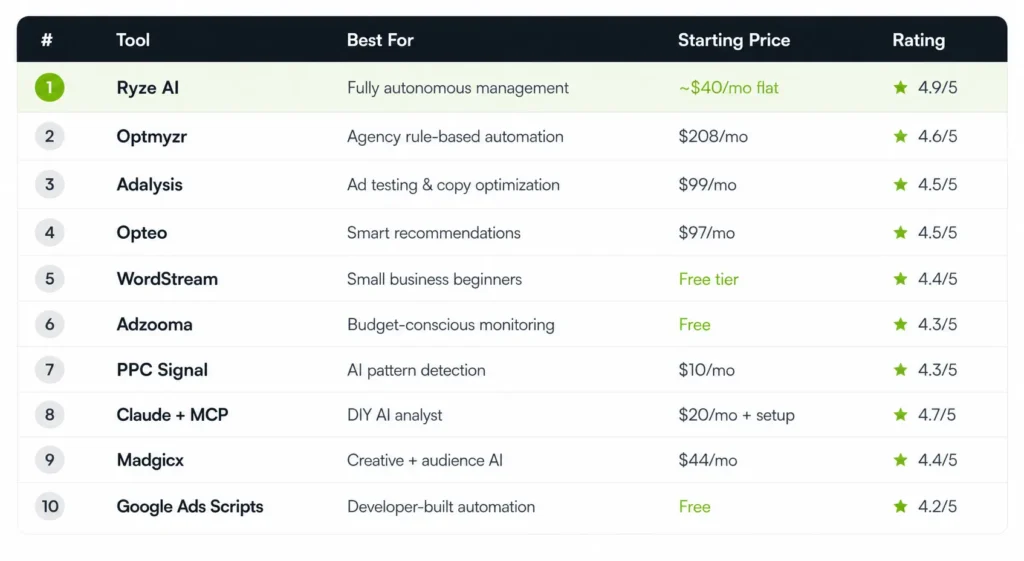
Here is Quick Comparison
Why AI Tools for Google Ads Matter in 2026
Google Ads in 2026 looks very different from what advertisers managed a few years ago.
Today, most businesses run multiple campaign types at the same time. Search campaigns, Performance Max, YouTube, Shopping, and Demand Gen all require different optimization strategies. Managing everything manually is becoming unrealistic for most teams.
That is where AI tools help.
Modern AI tools for Google Ads can analyze historical data, detect optimization opportunities, automate bid management, and improve conversion tracking faster than manual management. Instead of checking reports once a week, advertisers can now use automation to monitor campaigns continuously.
This shift is happening because machine learning can process far more data than a human marketer.
For example, an AI-powered platform can:
- Detect wasted spend before budgets are drained
- Analyze historical performance patterns
- Improve ROAS through smart bidding
- Monitor audience segments automatically
- Suggest better ad copy and keyword targeting
- Optimize budget pacing across campaigns
- Improve ad testing speed
The biggest advantage is speed.
A human manager might review a Google Ads campaign once every few days. AI agents can analyze performance every hour and react immediately when something changes.
That does not mean human oversight is unnecessary.
The best results usually come from combining automation with strategic decision-making. AI handles the repetitive work while marketers focus on messaging, offers, landing pages, and business goals.
What Makes the Best AI Tools for Google Ads?
Before choosing a platform, it is important to understand that different tools solve different problems.
Some advertisers only need better analytics and reporting. Others need complete automation across Google Ads campaigns.
The best AI tools usually improve performance in at least one of these areas:
1. Ryze AI – Best AI for Full Campaign Automation
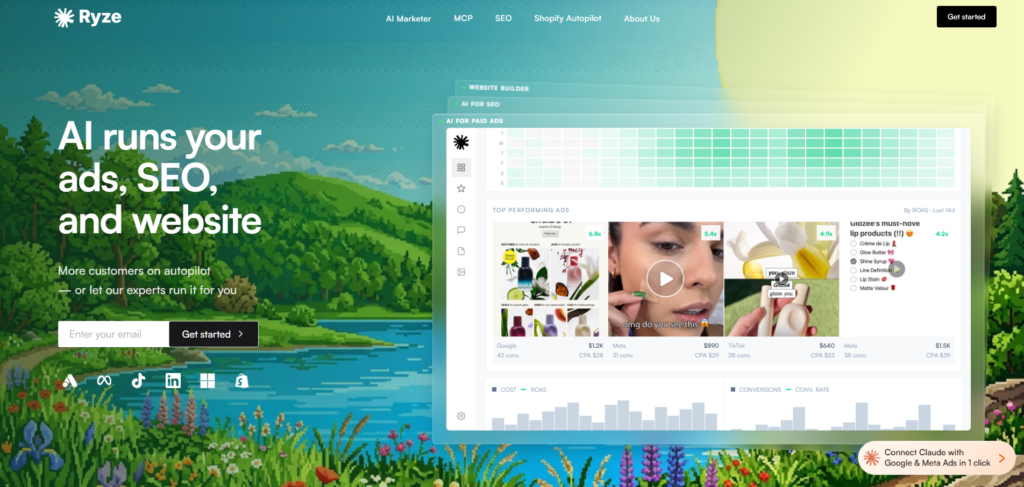
Ryze AI is one of the most advanced AI tools for Google Ads currently available.
Unlike many platforms that simply recommend changes, Ryze AI focuses heavily on automation. The system actively manages campaigns by adjusting bid strategy, reallocating budget, and monitoring performance continuously.
For advertisers running large PPC campaigns, this can save a huge amount of time.
The platform supports Google Ads, Meta Ads, LinkedIn, TikTok, and several additional advertising platforms from one dashboard. That makes it especially useful for agencies and businesses managing campaigns across Google and other channels.
One reason marketers like Ryze AI is its flat pricing structure.
Most tools increase subscription cost based on ad spend. Ryze AI uses a simpler model that works better for businesses scaling aggressively.
Best Features
Real-Time Bid Management
Ryze AI automatically adjusts bid settings based on live conversion behavior and campaign trends. Instead of waiting days to react to poor performance, the platform can optimize campaigns continuously.
Budget Pacing Automation
Budget pacing is difficult when campaigns scale quickly. Ryze AI automatically shifts ad spend toward campaigns generating better ROAS while reducing wasted spend on weaker ad groups.
AI Agents for Optimization
The platform uses AI agents to monitor performance continuously. These agents analyze campaign data, identify anomalies, and react quickly when metrics shift unexpectedly.
Pros
- Strong automation capabilities
- Works across Google Ads and other platforms
- Good for scaling campaigns
- Excellent bid optimization features
- Helpful for reducing manual workflow
Cons
- May feel too automated for some advertisers
- Requires trust in AI decision-making
Ryze AI works best for businesses that want to automate large parts of Google Ads management while still maintaining human oversight.
2. Optmyzr – Best for Advanced PPC Automation
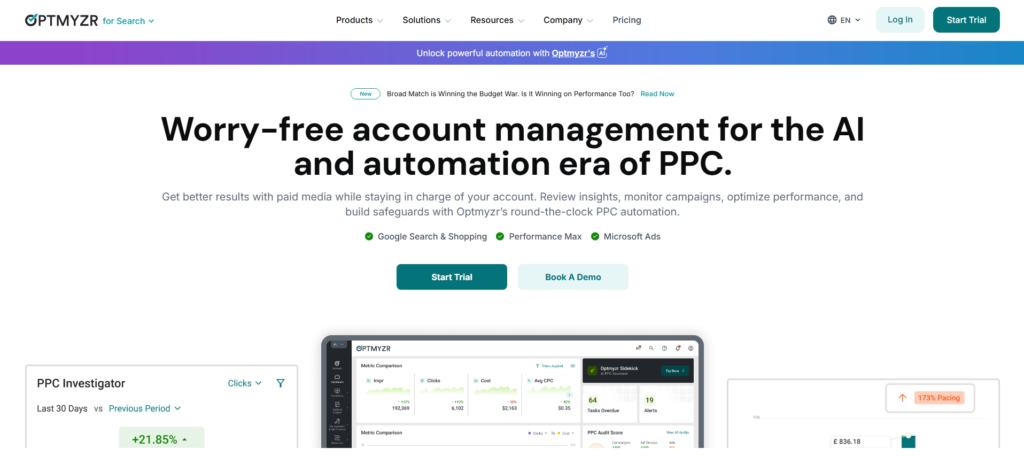
Optmyzr has been one of the most respected tools for Google Ads management for years.
It is especially popular among agencies managing multiple Google Ads accounts because it offers granular control over automation and reporting.
The platform includes advanced workflow systems, rule-based automation, reporting dashboards, and optimization recommendations.
Unlike fully autonomous systems, Optmyzr gives advertisers more manual control.
Why Advertisers Use Optmyzr
The biggest advantage is flexibility. You can create custom rules for almost any scenario inside your Google Ads campaign.
For example:
- Reduce bid if CPA rises too quickly
- Pause low-performing keyword groups
- Increase budget during high-conversion periods
- Improve budget pacing automatically
This level of control makes it a favorite among experienced PPC managers.
Key Features
One-Click Optimizations
The platform highlights optimization opportunities advertisers can apply quickly.
These recommendations include:
- Negative keywords
- Ad group improvements
- Smart bidding adjustments
- Budget pacing fixes
- Broad match analysis
Performance Max Reporting
Performance Max reporting inside Google Ads can feel limited.
Optmyzr helps advertisers analyze asset performance with more granular visibility.
Pros
- Excellent management tool for agencies
- Deep automation controls
- Strong analytics features
- Helpful reporting dashboards
Cons
- Steeper learning curve
- Higher subscription cost for large accounts
3. Adalysis – Best for Ad Testing and Ad Copy Optimization
Adalysis focuses heavily on ad testing.
While many AI tools try to do everything, Adalysis specializes in improving ad copy performance through continuous testing and optimization. For advertisers running large numbers of ads, this is extremely useful.
Why Adalysis Stands Out
The platform automatically analyzes headlines and descriptions to identify winning combinations.
Instead of manually reviewing ad copy results, advertisers can use Adalysis to improve testing speed and optimize creative performance.
This matters because stronger ad creative usually improves CTR, conversion rate, and overall ROAS.
Important Features
Ad Copy Testing
Adalysis continuously monitors ad copy testing results across campaigns and ad groups.
The system identifies statistically significant winners so advertisers can scale stronger ads faster.
Quality Score Tracking
Quality score tracking helps advertisers identify keyword issues affecting campaign efficiency.
The platform also helps analyze landing page relevance and ad relevance.
Daily Audit Reports
Adalysis sends daily audit recommendations that highlight optimization opportunities advertisers may miss manually.
Pros
- Excellent for ad testing
- Strong quality score tracking
- Great audit system
- Useful for improving ad creative
Cons
- Limited cross-channel support
- Less focused on bid management
Adalysis works best for advertisers who care heavily about ad copy performance and conversion optimization.
4. Opteo – Best for Simple Google Ads Optimization
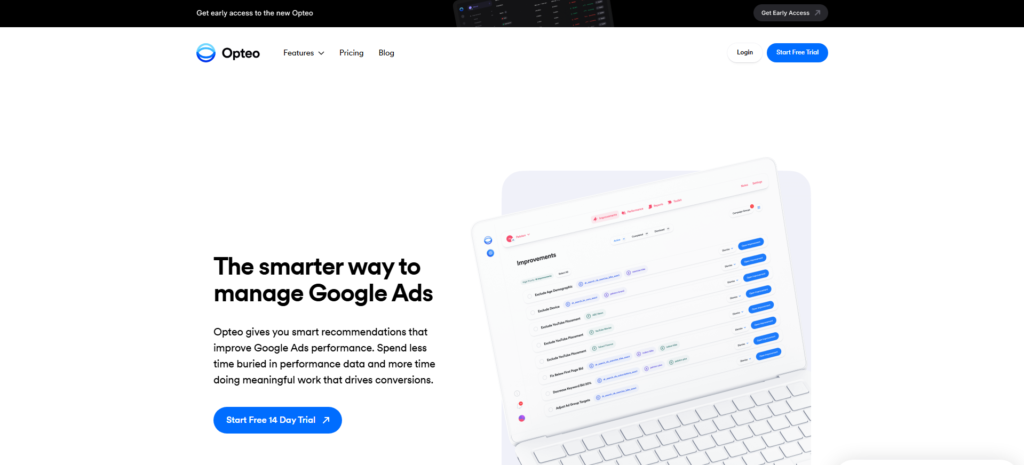
Opteo is designed for advertisers who want simplicity.
Instead of overwhelming users with complex reports, the platform focuses on actionable recommendations advertisers can apply quickly.
That makes it ideal for smaller teams and solo marketers.
Key Features
Optimization Recommendations
The platform highlights optimization opportunities inside your Google Ads account with estimated impact scores.
This helps advertisers prioritize changes more effectively.
Budget Monitoring
Budget pacing alerts help prevent overspending and campaign interruptions.
Slack Notifications
Teams can receive alerts directly inside Slack whenever major issues appear.
Pros
- Easy to use
- Strong interface
- Helpful recommendations
- Good for smaller teams
Cons
- Less advanced automation
- Limited cross-channel support
5. WordStream – Best for Beginners and Small Businesses
WordStream remains one of the most recognizable tools for Google Ads beginners.
The platform is especially useful for small businesses that want guidance without hiring a full PPC agency.
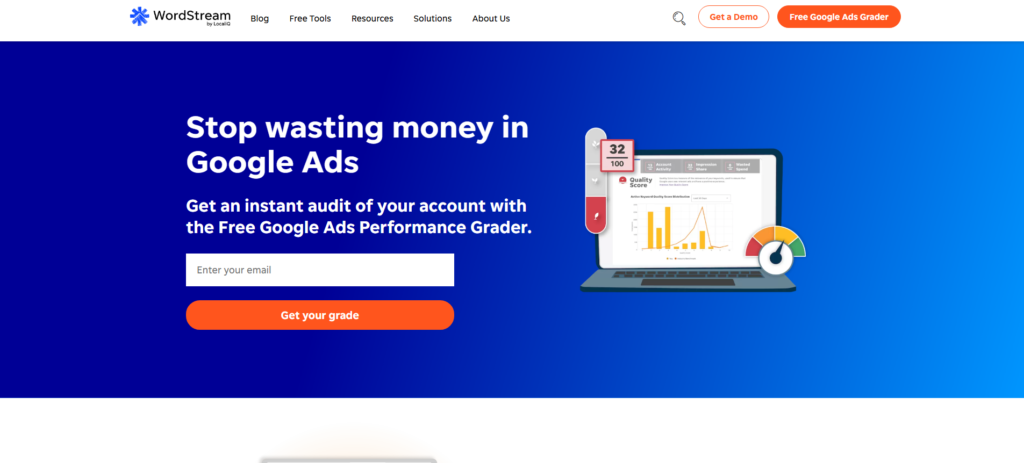
One major reason WordStream still matters is the free Google Ads Performance Grader.
This free tool gives advertisers a report card showing areas where campaigns need improvement.
What WordStream Does Well
WordStream simplifies PPC management.
Instead of expecting users to understand advanced optimization immediately, the platform focuses on practical recommendations.
This includes:
- Negative keywords suggestions
- Broad match warnings
- CTR analysis
- Ad spend review
- Keyword recommendations
Free Tier Advantages
The free tier gives smaller advertisers access to useful audit features without major investment.
For businesses spending under a few thousand dollars monthly, this can still provide meaningful value.
Pros
- Beginner-friendly
- Helpful audit features
- Strong educational tools
- Good entry-level platform
Cons
- Less advanced AI-powered automation
- Limited advanced workflow customization
6. Adzooma – Best Free AI Tool for Google Ads
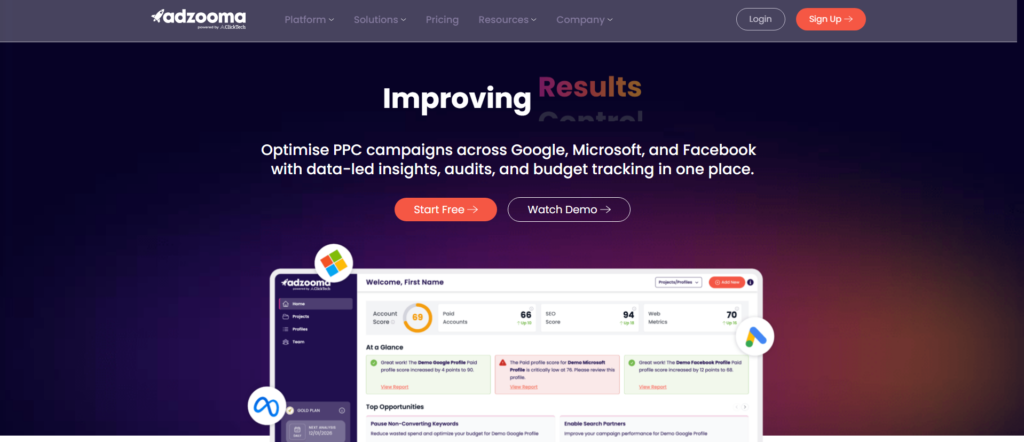
Adzooma is another strong option for budget-conscious advertisers.
The platform offers a surprisingly capable free tier that includes campaign monitoring, audit recommendations, and automation suggestions.
Why Adzooma Is Popular
Many smaller businesses cannot justify expensive PPC software.
Adzooma gives advertisers access to useful optimization features without large monthly costs.
Core Features
One-Click Optimizations
Advertisers can apply recommendations quickly without manually editing every setting.
Cross-Channel Support
The platform supports campaigns across Google, Meta, and Microsoft Ads.
Performance Monitoring
Adzooma monitors campaigns for issues related to:
- Wasted spend
- Budget pacing
- Keyword targeting
- Bid optimization
- Conversion tracking
Pros
- Good free tier
- Easy setup
- Useful audit system
- Beginner-friendly
Cons
- Less granular than premium platforms
- Recommendations can feel basic
7. PPC Signal – Best for Data-Driven Advertisers
PPC Signal focuses on data-driven analysis rather than full automation.
The platform monitors Google Ads data continuously and detects unusual performance changes automatically.
This helps advertisers react faster to problems.
How PPC Signal Works
Instead of only reviewing high-level reports, PPC Signal analyzes:
- CTR changes
- CPC increases
- Conversion shifts
- ROAS fluctuations
- Audience trends
- Keyword performance
The platform surfaces alerts whenever unusual patterns appear.
Best Use Cases
PPC Signal works especially well for advertisers who already manage campaigns manually but want deeper analytics support.
Pros
- Excellent anomaly detection
- Affordable pricing
- Strong analytics features
Cons
- Limited automation
- No full bid management system
8. Claude + Google Ads API – Best for Technical Teams
Technical marketers are increasingly combining AI systems like Claude with the Google Ads API.
This setup gives advertisers far more flexibility than standard platforms.
Why This Approach Matters
Instead of relying only on prebuilt dashboards, teams can analyze campaign data using custom prompts and workflows.
This approach helps advertisers:
- Analyze historical data
- Build custom reporting systems
- Create automated audit workflows
- Detect optimization opportunities
- Improve reporting efficiency
Limitations
This method requires technical knowledge.
Most businesses will still prefer dedicated tools for Google Ads unless they already have internal development resources.
9. Madgicx – Best for Creative Optimization
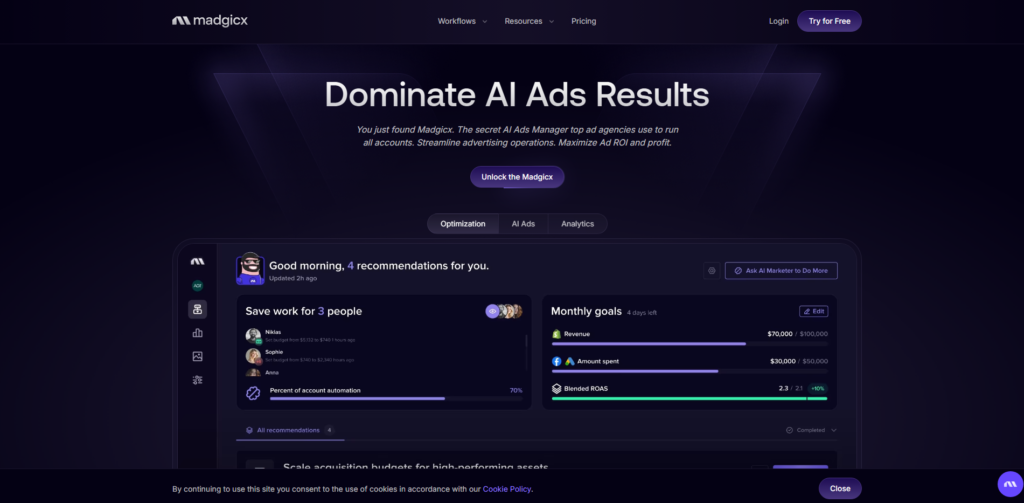
Madgicx focuses heavily on creative analysis and audience optimization.
It is especially useful for eCommerce brands running large creative campaigns across Google and Meta.
Main Features
Ad Creative Analysis
The platform analyzes ad creative performance to identify trends affecting conversion and ROAS.
Audience Segmentation
Madgicx helps advertisers analyze audience segments based on campaign behavior and historical performance patterns.
Pros
- Strong creative analytics
- Helpful audience tools
- Good cross-channel support
Cons
- Better for Meta than Google Ads
- Learning curve for beginners
10. Google Ads Scripts – Best Free Automation Option
Google Ads Scripts remain one of the most flexible ways to automate tasks inside Google Ads.
Scripts use JavaScript to automate repetitive actions directly inside campaigns.
Common Automation Tasks
Advertisers often use scripts for:
- Budget pacing alerts
- Bid management
- Quality score tracking
- Negative keywords discovery
- Audit automation
Why Scripts Still Matter
Scripts are completely free.
For technical advertisers, they offer powerful customization without additional subscription cost.
Downsides
Scripts require maintenance and technical knowledge.
Most businesses will not want to manage dozens of scripts manually.
How to Choose the Right AI Tool for Google Ads
Choosing between different AI tools for Google Ads depends on your goals, budget, and management style.
If You Want Full Automation
Choose a platform focused heavily on automation and AI-powered optimization.
These tools help automate bid adjustments, budget pacing, and campaign management with minimal manual work.
If You Need Better Ad Copy
Platforms focused on ad copy testing and ad creative optimization will provide more value.
Strong headlines and descriptions directly improve CTR and conversion rates.
If You Manage Multiple Clients
Agencies usually need:
- Cross-channel support
- Advanced workflow systems
- Granular reporting
- Audit features
- Better analytics
If You Are a Beginner
Start with a simpler tool like WordStream or Adzooma.
These platforms help advertisers learn PPC basics while still improving campaign performance.
Final Thoughts on the Best AI Tools for Google Ads
AI tools are no longer optional for serious advertisers.
Managing campaigns manually across Google Ads in 2026 is becoming increasingly difficult because of growing complexity, audience fragmentation, and automation trends inside the platform itself.
The best AI tools for Google Ads help advertisers:
- Improve performance faster
- Reduce wasted spend
- Automate repetitive workflow tasks
- Analyze campaign data more effectively
- Improve ROAS with smarter optimization
But each platform solves different problems.
Some tools focus on bid optimization. Others specialize in ad testing, analytics, or campaign automation.
That is why the best choice depends on your specific workflow and campaign goals.
For businesses wanting strong automation, Ryze AI is one of the strongest options available today.
For agencies needing advanced PPC management, Optmyzr remains excellent.
If ad creative and testing matter most, Adalysis stands out.
And for beginners, WordStream and Adzooma still provide solid value through their free tier offerings.
The important thing is not simply using AI tools.
It is using AI tools for Google Ads strategically to improve campaign quality, increase conversion efficiency, and build a smarter long-term advertising system.
Need Expert Help Managing Your Google Ads?
At AK Badhak LLC, we help businesses run profitable Google Ads campaigns with smarter targeting, better optimization, and data-driven strategies that improve real results. From keyword research and ad copy creation to bid management and conversion tracking, our team focuses on growing your ROI while reducing wasted ad spend.
Whether you are a local business or a growing brand, our Google Ads management services are built to help you scale faster with campaigns that are optimized for performance and long-term growth.
Frequently Asked Questions
What are the best AI tools for Google Ads in 2026?
Some of the best AI tools for Google Ads in 2026 include Ryze AI, Optmyzr, Adalysis, WordStream, and Adzooma. Each tool focuses on different areas like automation, bid optimization, ad testing, and campaign management.
Can AI improve Google Ads performance?
Yes, AI can improve Google Ads performance by analyzing large amounts of campaign data and making faster optimization decisions. It helps advertisers reduce wasted spend, improve conversion rates, and optimize bids more efficiently.
Are AI tools for Google Ads suitable for small businesses?
Many AI tools offer beginner-friendly features and free tier plans that work well for small businesses. Tools like WordStream and Adzooma help smaller advertisers manage campaigns without needing advanced PPC experience.
Do AI tools completely replace PPC managers?
No, AI tools help automate repetitive tasks, but human oversight is still important for strategy, messaging, and audience targeting. The best results usually come from combining AI-powered automation with expert campaign management.
Which AI tool is best for ad copy testing?
Adalysis is one of the best options for ad copy testing because it focuses heavily on headlines and descriptions optimization. It helps advertisers identify winning ad creative faster using data-driven testing.